Feb
19
Florida’s Capital Sentencing Scheme Violates the Sixth Amendment
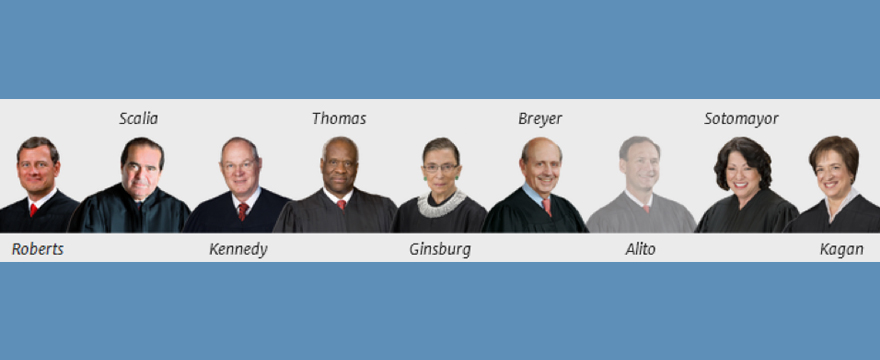
On 01/12/16, the United States Supreme Court overturned Florida’s death penalty by an 8-1 vote in Hurst v. Florida, 577 U.S. __ (2016). SOTOMAYOR, J., delivered the opinion of the Court, in which ROBERTS, C.J., and SCALIA, KENNEDY, THOMAS, GINSBURG, and KAGAN, JJ., joined. BREYER, J., filed an opinion concurring in the judgment. ALITO, J., filed a dissenting opinion.[2]
In Hurst v. Florida, the Court held that Florida’s capital sentencing scheme violates the Sixth Amendment right to trial by jury. Under the old death penalty laws of Florida, the maximum sentence a capital felon could receive on the basis of a conviction alone was life imprisonment; a capital felon could only be sentenced to death if an additional sentencing proceeding resulted in “findings by the court that such person shall be punished by death.” Florida Statute §775.082(1) (2015) (emphasis added). Thus, after a unanimous 12-0 conviction by jury for a capital felony, the sentencing judge would then conduct an evidentiary hearing or the death phase before the jury. See Fla. Stat. §921.141(1) (2015). The jury would then, by majority vote, render an “advisory sentence.” See Fla. Stat. §921.141(2). Notwithstanding that jury recommendation, the court had to independently find and weigh the aggravating and mitigating circumstances before entering a sentence of life or death. See Fla. Stat. §921.141(3). Since Florida law required the judge (rather than the jury) to make the critical findings necessary to impose death, the Supreme Court ruled in Hurst that it was unconstitutional.
The Florida Legislature is now working to remedy the issue. On 02/18/16, the Florida House voted (93-20) to approve a death penalty bill that would require a 10-2 vote. Under the House bill, a judge cannot impose a death sentence if the jury recommends life in prison. This is a change from prior laws. The measure will head to the Senate, which is expected to approve the bill soon, and then it will go to Governor Rick Scott for consideration.
If a 10-2 vote becomes law in Florida, the state will continue to be an “outlier” and further constitutional challenge will follow. Nearly every other state with the death penalty, including the federal government, requires a unanimous vote in favor of death. Alabama is the only other state with the 10-2 standard. The Supreme Court, however, has yet to rule on the constitutionality of a 10-2 vote or the requirement of a unanimous verdict. For now, the death penalty in Florida is still on hold.
[1] Hurst v. Florida, Oyez, https://www.oyez.org/cases/2015/14-7505 (last visited Feb 18, 2016).
[2] http://www.supremecourt.gov/opinions/15pdf/14-7505_5ie6.pdf
Travis Mydock is a criminal defense attorney with CANAN LAW in Saint Augustine. He previously served as an Assistant State Attorney in the Seventh Judicial Circuit.